-
Informed Consent &
Malpractice -
Employment Litigation
ADA - Disability - Sexual Misconduct
Discrimination - Worker's Compensation -
Emotional &
Physical Damages
Conscious Pain & Suffering
Post-Traumatic Stress Disorder (PTSD)
Neuropsychiatric Autopsy - Standards for Experts
-
Product Liability
Medical Devices & Pharmaceuticals
Toxic Tort -
Criminal Justice &
Public Safety
Diminished Capacity - Drug Addiction
Competency to Confess
Death Penalty Mitigation
Workplace Safety - Family & Custody Issues
-
Testamentary &
Contractual Capacity -
Professional &
Organizational Ethics
Patient Care - Managed Care - Privacy -
Psychoanalysis &
Cultural Perspectives
Harold J. Bursztajn, M.D. [CV], a Harvard Medical School ('77) and Princeton University ('72) honors graduate, maintains an active patient practice, has a distinguished academic achievement record, and consults nationally. He is currently a senior clinical faculty member at Harvard Medical School and co-founded the Program in Psychiatry and the Law at the Beth Israel Medical Center Psychiatry of Harvard Medical School. In recognition of his many years serving as a Principal Mentor for students at Harvard Medical School Dr. Bursztajn recently received the A. Clifford Barger Excellence in Mentoring Award. Additionally, he consults, teaches, and testifies nationwide as an expert qualified in general psychiatry and forensic neuropsychiatry. His special areas of interest include medical and psychiatric malpractice, psychiatric diagnosis, suicide prevention, sexual boundary violation claim evaluations, risk management consultation, boundary training, detection of malingering, pain impairment evaluations, informed consent, medication management standards, managed health care, psychiatric and forensic neuropsychiatric autopsies, testamentary capacity, diminished capacity, death penalty mitigation, and employment related issues such as ADA, disability, workers' compensation, and sexual harassment. Other areas of special clinical and forensic interest include the forensic neuropsychiatric evaluation of medical complications of psychiatric illness and medication as well as psychiatric complications of medical illness.
Dr. Bursztajn's litigation prevention services include both continuing education workshops and individual consultations. He has taught clinicians, judges, and attorneys on a variety of forensic topics, including evaluation of Post-traumatic Stress Disorder and detection of medical and psychiatric malingering and misattribution, as well as a variety of clinical topics, including informed consent, assessment of suicide, pain management, psychopharmacology, the addictions, and the treatment of acutely and chronically mentally ill patients. He also consults widely to both public and private organizations including state and federal agencies, the courts, law firms, health care providers, educational institutions, and corporations.
Dr. Bursztajn has published more than 70 peer-reviewed medical journal articles, 4 books, and more than 30 book chapters. He is also a major contributor to national media health reporting designed to educate the general public. A respected peer reviewer for medical, mental health, and ethics journals, he has been qualified nationally as an expert in State and Federal courts. He has served on a variety of advisory and expert panels including the ABA State Judicial Institute Benchbook Project for Judges.
"There is a growing recognition of the deep influence of unrecognized but influential biases on decision-making in medicine. In economics the 2002 Nobel prize winner Danny Kahneman focused on such biases or heuristics." Dr. Bursztajn in his first book "Medical Choices" pioneered integrating the decision-analysis framework of Daniel Kahneman and his long-time collaborator, Amos Tversky, with the psychoanalytic framework originated by Sigmund Freud to provide medical decision-makers and educators with a road map of common motivational and heuristic pitfalls to avoid in medical decision-making.
His writings have contributed to an increased awareness of the need for physicians to be able to analyze their own countertransference responses to patients in managed health care pressured settings. Such works include Captive Patients, Captive Doctors and Managed-Health-Care Complications and Clinical Remedies.
Dr. Bursztajn's work also helps psychiatrists working with the sickest patients on managed health care pressured inpatient units to be able to analyze the meanings and motivations behind decision-making behavior which can sometimes lead to premature discharge and tragic outcomes for some of these patients. For more detail, see Triage Pitfalls in Managed Medical and Mental Health Care.
Dr. Bursztajn's contributions to protecting public education and safety include being among the public opinion leaders urging the identifying, stopping and preventing of the current vicious cycle of cop-cat terrorism. He often consults as a forensic psychiatric expert for public education and the news media. His public service contributions include a focus on protecting public safety. He has appeared nationally on CNN Headline News (October 21, 2002) and on the Discovery Channel's programs "Who Killed Julius Caesar?, " "Who Killed Tutankhamen?," "Who Killed Alexander the Great?," "The Mysterious Death of Cleopatra," and "Columbus: Secrets From The Grave" and regionally on the New England Cable News NECN (October 16, 2002). Before the identities of the terrorist snipers were revealed, he urged law enforcement and the public to be on the lookout not for those in the mold of serial killers but to focus its search on potential "copy-cat" terrorists who were encouraged by 9/11 to join the cycle of terrorism currently sweeping the globe under the false promise being offered by some Islamic fundamentalists of heaven for holy war murderers.
What motivated Dr. Bursztajn to become a doctor?
- The Shoah and its Aftermath: the
testimony of Dr. Bursztajn's father, a Holocaust survivor.
- Harvard Medical Alumni Bulletin issue from Autumn 2006 titled "Sparks of Inspiration" includes the article "Prescriptions for Hope". Lessons from the Holocaust in how doctors can heal through hope, an adaptation of Dr. Bursztajn's original article above.
- For more information on Jewish Lodz, please visit the Lodz ShtetLinks home page.
- Two photographs of Dr. Bursztajn's mother who was part of the Lodz resistance in 1944.
- Daniel Kahneman, on staff at Princeton, who as a psychologist received the Nobel Prize in economics and has made fundamental contributions across disciplinary boundaries
- Among Dr. Bursztajn's memorable teachers at Princeton was Theodore Weiss, Poet, Professor and Journal Editor.
- For those interested in the foundations of clinical decision making and forensic analysis, inference, and opinion formulation, this resource is well worth the effort. Hilary Putnam’s writings include the preface to the 1990 edition of Medical Choices, Medical Chances.
- Caring for patients and life long learning is a commitment that Dr.
Bursztajn shares with friends, colleagues and mentors/mentees.
- Photo: Dr. Bursztajn with Acting Dean of Harvard Medical School Barbara McNeil, MD at a meeting focusing on developing medical school education resources.
- Obituaries in the Huffington Post and Harvard University Press for Dr. Bursztajn's friend and mentor Hilary Putnam, who passed away on March 13th, 2016. Putnam wrote the preface to Dr. Bursztajn's groundbreaking book Medical Choices, Medical Chances and their conversations continued for over 40 years.
- Dr. Bursztajn and Dr. Sabine Hildebrandt are pictured with their mentee Ivana Viani, a Harvard Medical School student chosen to present her research on ethical decision making in times of crisis at Soma Weiss Research Day.
- Dr. Bursztajn is pictured with Professor A Stone Freedberg, a distinguished clinician and Harvard Medical School Professor Emeritus at Dr. Freedberg's 99th birthday party. Dr. Freedberg continued to help Dr. Bursztajn teach medical students patient care until his passing in 2009 at the age of 101. Early on, as a medical student in the 1970's, Dr. Bursztajn joined Dr. Freedberg in what became a many decade dialog with the artist Hyman Bloom. More information about Dr. Freedberg's full life can be found in his moving obituary in the Boston Globe and Jonathan Mahler's article in the New York Times, "The Good Doctor."
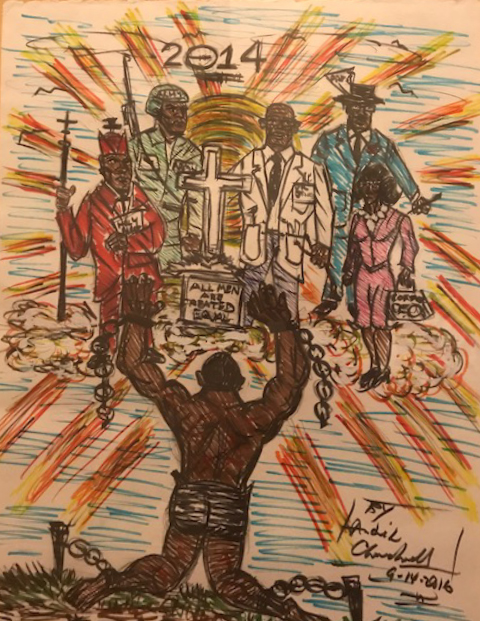
- Dr. Bursztajn's friend and colleague Andre Churchwell, MD has been named associate dean for Diversity for Vanderbilt University School of Medicine and has been named chief diversity officer of VUMC to better reflect Nashville. Dr. Churchwell talks about his experiences as a young man in "A View From the Inside" produced by the Vanderbilt Institute for Digital Learning. Dr. Churchwell has also written movingly on his reflections of a Harvard Medical School Reunion: Reunions, signposts on life's highway. The role of creativity in resilience from the massive psychic trauma of slavery is well illustrated in a drawing by Dr. Churchwell titled Vision.
- Learning to Listen Well. Brad Crotty, MD, a mentee of Dr. Bursztajn's, talks about the Mentored Casebook Project at Harvard Medical School of which Dr. Bursztajn has been a Mentor since 2003 and a Project Advisor since 2008.
- Daniel D. Federman, M.D., a friend and longtime colleague
of Dr. Bursztajn's, was honored at Harvard Medical School
with a Symposium on Medical Eduction. About Dr. Federman,
Dr. Bursztajn had this to say:
Dan Federman embodies not only what is best about HMS but also what is best about humanity aka menschlichtkeit. His ability to be authentic, learned as to fundamentals, and kind in the midst of uncertainty is an unforgettable inspiration.
- Dr. Bursztajn is pictured at his 35th Princeton reunion with classmate Rob Hamm, Ph.D., on the faculty at the University of Oklahoma medical school, who worked with Dr. Bursztajn on the 1981 book Medical Choices, Medical Chances and on many projects since.
- Dr. Bursztajn is pictured at his 35th Princeton reunion with classmate Dr. James Hinton, a family physician who cares for patients in north central Texas.
- An Obituary of one of Dr. Bursztajn's mentors, Dr. J. Gordon Scannell, a leading Thoracic Surgeon who passed away on August 24, 2002.
- Article: On Being Mentored and Mentoring. Dr. Bursztajn's recollections of being mentored by Leston Havens, M.D. (1924-2011) in the Winter, 2012 International Society for the Psychological Treatments of the Schizophrenias and other Psychoses (ISPS).
Reviews of and praise for Dr. Bursztajn and his work.
Interviews and Features of Dr. Bursztajn and his work
- Harold J. Bursztajn '72, on mental-health care. Dr. Bursztajn is interview in the Princeton Alumni Weekly on the role of mental health care in the aftermath of the Newtown shootings.
- Psychological Autopsy. Princeton Alumni Review's profile of Dr. Bursztajn
- Plank By Plank, Scholars Build Party Platforms. Harvard Crimson Interview with Dr. Bursztajn as a Presidential Candidate advisor on health care issues
- Putting Caesar on the Couch. Harvard Magazine's profile of Dr. Bursztajn’s contributions as a forensic neuropsychiatrist to highly acclaimed British-based educational film, "Who Killed Julius Caesar?", September 1, 2003.
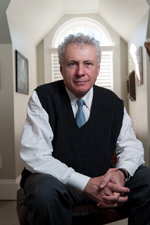
HAROLD J. BURSZTAJN, M.D.
President of the American Unit of the UNESCO Bioethics Chair
Associate Clinical Professor of Psychiatry
co-Founder, Program in Psychiatry & the Law @
BIDMC Psychiatry of Harvard Medical School
TEL (617) 492-8366 FAX (617) 441-3195
e-mail: harold_bursztajn@hms.harvard.edu
Questions or comments, please contact the Web Developer


