-
Informed Consent &
Malpractice -
Employment Litigation
ADA - Disability - Sexual Misconduct
Discrimination - Worker's Compensation -
Emotional &
Physical Damages
Conscious Pain & Suffering
Post-Traumatic Stress Disorder (PTSD)
Neuropsychiatric Autopsy - Standards for Experts
-
Product Liability
Medical Devices & Pharmaceuticals
Toxic Tort -
Criminal Justice &
Public Safety
Diminished Capacity - Drug Addiction
Competency to Confess
Death Penalty Mitigation
Workplace Safety - Family & Custody Issues
-
Testamentary &
Contractual Capacity -
Professional &
Organizational Ethics
Patient Care - Managed Care - Privacy -
Psychoanalysis &
Cultural Perspectives -
Loading
On the occasion of the World Psychiatric Association International Congress
July 12-16, 2006 Istanbul, Turkey
An Invitation to a
Movie Workshop
Co-chaired and Discussed by:
Maurice Preter, M.D., Columbia Medical School and Harold J. Bursztajn, M.D., Harvard Medical School
Childhood Trauma in Film: Undzere Kinder (Our Children)
אינדזערע
קינדער
Saturday, July 15, 2006
18:00 – 20:30
Istanbul Convention and Exhibition Center (ICEC)
Anadolu Room
UNDZERE KINDER (OUR CHILDREN), Poland 1948
In Yiddish language with English subtitles
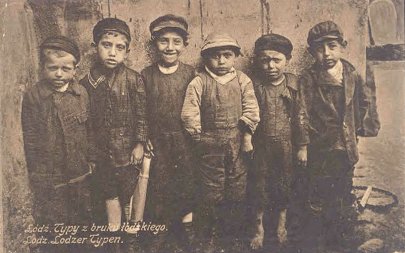
In what has become a tradition during medical-psychiatric and psychoanalytic conferences around the world, Drs. Preter (www.psychiatryneurology.com) and Bursztajn (www.forensic-psych.com) continue their exploration of post-Shoah psychological trauma and its representation in film.
As in previous years (e.g., International Psychoanalytic Association Meeting 2005 in Rio de Janeiro; ISTSS 2004 in Buenos Aires and American Psychiatric Association 2002 in Philadelphia), this workshop will screen and discuss the last Yiddish-language movie made in Poland, Undzere Kinder (Our Children), 1948.
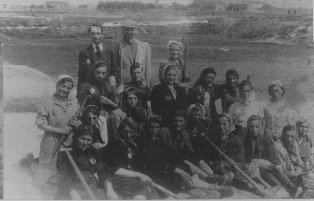
Protecting public health by day, building secret underground refuges by night, Dr. Bursztajn's mother (3rd from right; first row) with other Lodz ghetto resistance members in 1944.
From the program:
In 1945, after the end of World War II and the slaughter of the European Jews, some 250,000 Jewish survivors temporarily returned to Poland, where actors Shimon Dzigan and Yisroel Schumacher, director Natan Gross and producer Shaul Goskind teamed up to make Our Children. In this last Yiddish-language feature made in Poland, part docu-drama, part melancholic comedy, famous Yiddish comedians Dzigan and Schumacher visit the Helanowek orphanage near the city of Lodz to perform for an audience of Jewish orphans who survived the Holocaust. Their theatrical performance, although well-intentioned, stirs up painful memories of recent events, but also offends the children by the sentimentalized and naïve depiction of wartime conditions. Having all lived through the reality of separation and loss, the children take over the stage, outdo the performers, and tell their stories. . .
The little actors in Our Children were all residents of the orphanage, many of them the sole survivors of their families.
For more background on the history of this workshop, and contact information,
go to:
www.psychiatryneurology.com (Dr.
Preter) and www.forensic-psych.com (Dr.
Bursztajn)
Co-sponsored by the Program in Psychiatry and the Law at Beth Israel Deaconess Medical Center of Harvard Medical School
Questions or comments, please contact the Web Developer


